

Quick answer
Larger whale watching cruises departing from Kailua Pier accommodate 40 to 100 passengers and feature enclosed cabins, restrooms, and shade structures. These vessels measure 50 to 65 feet and prioritize comfort over maneuverability. Departures run from 07:00 through midday, with morning slots offering calmer sea conditions and higher whale activity before afternoon trade winds intensify along the Kona Coast.
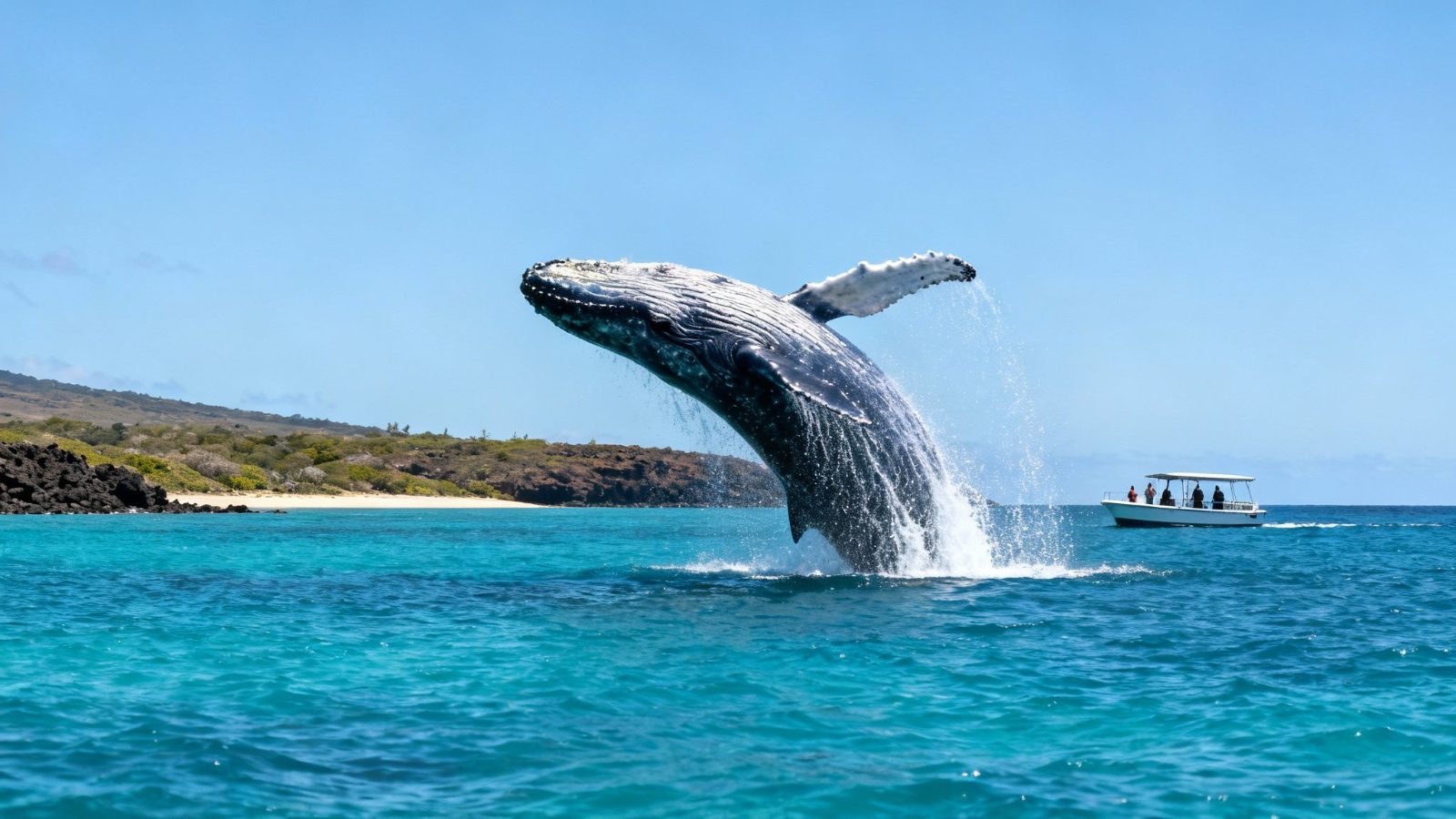
Humpback whales migrate to Hawaiian waters between December and April, with peak activity concentrated in February and March when calving females occupy nearshore zones along the Kona Coast. Cruise vessels operating from Kailua Pier during this window range from double-deck catamarans to single-hull charter boats, all designed to carry larger groups while maintaining regulatory distance from marine mammals. A kailua kona whale watching cruise aboard a larger boat differs from zodiac tours in three operational dimensions: passenger capacity, onboard facilities, and sea-state tolerance. Vessels in the 50-foot-plus category offer indoor seating, galley service, and accessible restrooms—infrastructure absent on rigid-hull inflatables. This makes them suitable for families with young children, visitors prone to seasickness who benefit from stabilized platforms, and groups requiring handicap accommodations. Trade-offs include reduced speed and wider turning radius, which limits close maneuvering when pods surface unexpectedly. Most operators schedule two to three departures daily between 07:00 and 12:00, aligning with the morning window when whale activity peaks and sea conditions remain manageable. Afternoon slots exist but contend with increased wind chop as Kona's prevailing northeast trades accelerate after midday. Tour duration typically spans two and a half to three hours, providing time to transit from Kailua Pier to deeper water where humpbacks concentrate. Captains coordinate via marine radio to share sighting locations, a practice that benefits larger boats whose slower transit requires advance positioning. Vessel choice hinges on priorities: cruise-style boats deliver comfort and amenity access, while smaller craft offer agility and closer water-level perspectives. Both vessel types depart from the same pier infrastructure and operate under identical federal approach regulations, maintaining 100-yard minimum distances from whales. The distinction lies in passenger experience rather than wildlife encounter probability, as humpback distribution across Kona waters remains consistent regardless of boat size.
“Cruise vessels operating from Kailua Pier range from double-deck catamarans to single-hull charter boats, all designed to carry larger groups while maintaining regulatory distance from marine mammals.”
Kailua Kona Whale Watching Cruise: Large Vessel vs Zodiac Experience
Visitors choosing a whale watching experience in Kailua-Kona must decide between the stability of large cruise vessels and the proximity provided by smaller zodiac boats. Each vessel type offers a distinct encounter with the marine environment.
| Large Cruise Vessel Stable platform, cruise-style experience | Zodiac Boat Agile, high-proximity experience | |
|---|---|---|
| Vessel Size and Stability | 40–60 feet, high stability | 15–25 feet, responsive motion |
| Passenger Capacity | 40–150 passengers | 6–24 passengers |
| Viewing Perspective | Elevated deck, 10–15 feet above water | Low to water, near-surface level |
| Speed and Agility | Moderate speed, wider turning radius | High speed, rapid maneuverability |
| Comfort and Amenities | Restrooms, shade, and seating available | Minimal seating, open-air exposure |
Verdict: Choose a large cruise vessel for onboard comfort and amenities, or select a zodiac boat for a faster, more intimate encounter with whales at sea level.
Daily Operational Hours for Kailua Kona Whale Watching Cruise
Kailua-Kona whale watching cruise services operate daily from Kailua Pier to accommodate scheduled vessel departures.
| Monday | 07:00–17:00 | |
|---|---|---|
| Tuesday | 07:00–17:00 | |
| Wednesday | 07:00–17:00 | |
| Thursday | 07:00–17:00 | |
| Friday | 07:00–17:00 | |
| Saturday | 07:00–17:00 | |
| Sunday | 07:00–17:00 |
Arrival at Kailua Pier for Your Kailua Kona Whale Watching Cruise
Kailua Pier is located in the heart of Kailua-Kona at Kailua-Kona, HI 96740. The most efficient approach for visitors arriving by car or on foot is via Ali'i Drive, which runs directly along the shoreline adjacent to the pier.
Ali'i Drive to Kailua Pier
Hele-On Bus to Kailua-Kona stop
Walk via Ali'i Drive toward the waterfront
Direct drop-off at Kailua Pier
Pre-Visit Preparation for a Kailua Kona Whale Watching Cruise
Preparation for a cruise-based whale watching tour differs from smaller vessel trips, focusing on multi-hour comfort and marine conditions.
-
Book your cruise in advance — Tours depart multiple times daily between 07:00–17:00, with morning slots filling quickly during peak whale season.
-
Bring reef-safe sunscreen and sun protection — You'll spend extended periods on open decks with limited shade, and Hawaii requires reef-safe formulas.
-
Pack motion sickness medication if prone — Larger vessels are more stable than zodiacs, but ocean swells can still affect sensitive passengers on multi-hour trips.
-
Wear layered clothing and a windbreaker — Temperatures drop on the water, especially during morning departures, and wind increases as the day progresses.
-
Bring binoculars or a zoom camera — Cruises maintain greater distances from whales than smaller boats, so magnification improves viewing of surface behaviors and breaches.
-
Arrive 20–30 minutes before departure — Check-in, boarding, and safety briefings occur at Kailua Pier before the scheduled departure time.
Check availability
Frequently Asked Questions About Kailua-Kona Whale Watching
Everything you need to know about kailua kona whale watching cruise