

Quick answer
Whale watching cruises along the Kona coast depart daily from Honokohau Small Boat Harbor between 7 AM and 5 PM, with morning sailings offering the calmest ocean conditions and clearest visibility. Humpback whales migrate to Hawaiian waters from mid-December through early April, with peak activity concentrated in February and March. Tours require advance booking through licensed operators, as harbor access itself is free but vessel space is limited during high season.
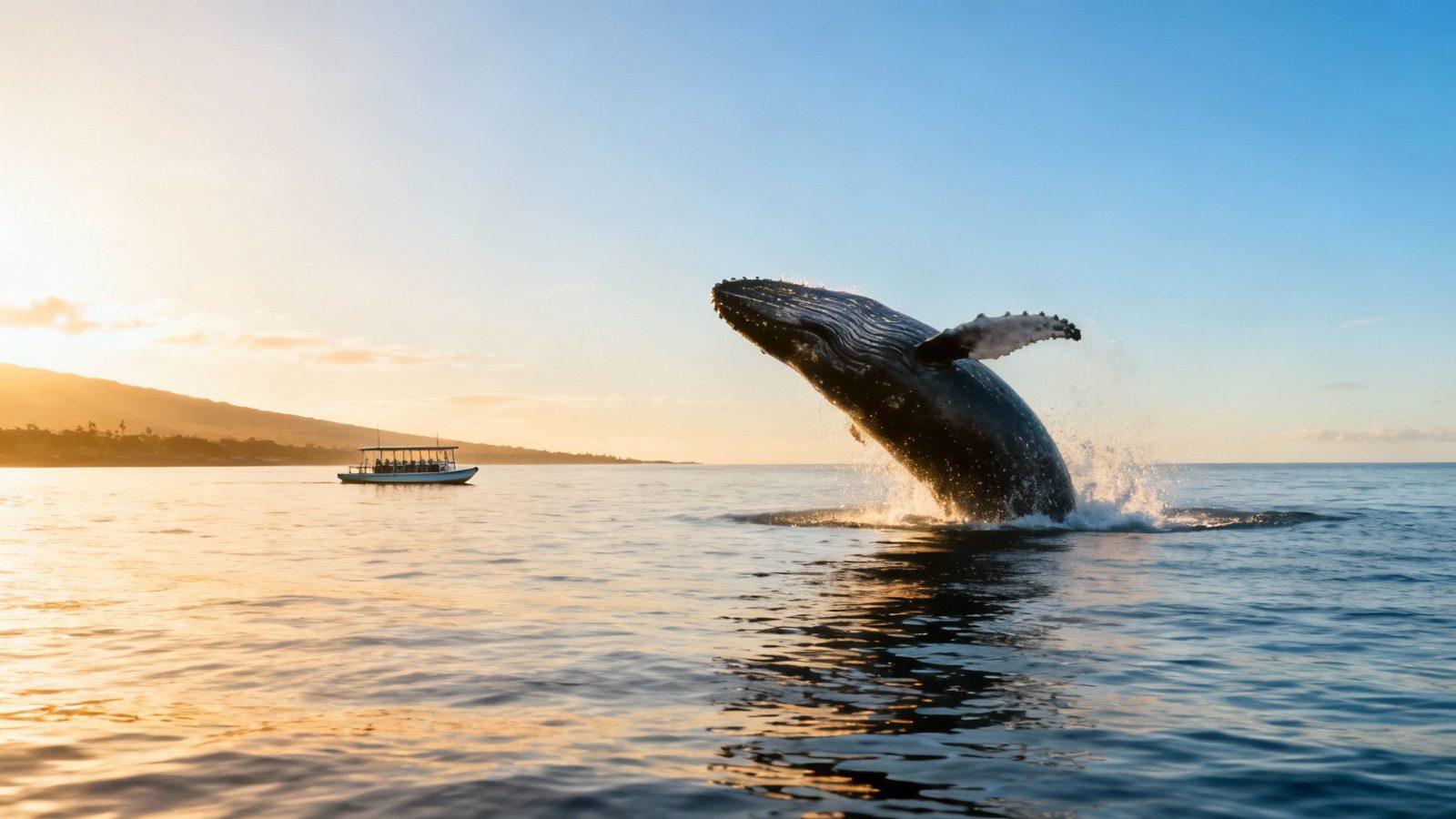
Humpback whales travel more than 3,000 miles from Alaskan feeding grounds to the warm, shallow waters surrounding the Big Island each winter, making the Kona coast one of the most reliable observation points in the Hawaiian archipelago. The leeward position of Kailua Kona provides natural wind protection, which translates to calmer seas and steadier platforms for whale watching compared to the island's windward side. Honokohau Small Boat Harbor serves as the primary departure point, positioned four miles north of Kailua-Kona town along Highway 19. Morning departures align with the whales' surface activity patterns and the trade winds' daily cycle. Between 7 AM and 10 AM, winds remain light and swells minimal, creating optimal conditions for spotting dorsal fins, flukes, and breaching behavior. As midday approaches, thermal heating over the island's volcanic slopes generates offshore breezes that roughen the channel, reducing visibility and comfort. Operators schedule multiple daily sailings to accommodate different visitor schedules, but early slots consistently deliver smoother rides and longer surface observation windows. The kailua kona whale watching cruise on the big island operates within a highly regulated framework. Federal and state marine mammal protection laws mandate minimum approach distances of 100 yards, and captains trained in cetacean behavior adjust positioning based on the whales' movements rather than pursuing them. Cow-calf pairs, identifiable by the smaller calf staying close to the mother's flank, receive additional buffer zones. Hydrophones allow passengers to hear the males' complex songs underwater, audible up to 20 miles away during peak breeding season. Season timing determines encounter frequency. Early December marks the arrival of advance scouts, typically adult males, with pregnant females and juveniles following through January. February and March see the highest concentrations as calves are born in Hawaiian waters and mothers nurse them before the return migration north. By mid-April, most whales have departed, though stragglers occasionally appear into early May. Tour availability follows this migration calendar, with reduced sailings or suspended operations outside the core December-to-April window. Vessel types range from large twin-hull catamarans carrying 40-plus passengers to smaller rigid inflatables accommodating under 20. Larger boats offer stability and covered seating but less maneuverability, while smaller craft provide closer water-level perspectives and quicker repositioning when whales surface unexpectedly. Duration typically spans two to three hours, allowing time to reach productive zones along the coast where whales concentrate near reef drop-offs and channel entrances.
“Morning departures align with the whales' surface activity patterns and the trade winds' daily cycle, creating optimal conditions for spotting dorsal fins, flukes, and breaching behavior.”
Operating Hours for Kailua Kona Whale Watching Cruise on the Big Island
The harbor area serving whale watching cruises in Kailua-Kona remains open daily to accommodate scheduled departures. Operating hours are consistent throughout the week to support boat traffic and visitor access.
| Monday | 07:00–17:00 | |
|---|---|---|
| Tuesday | 07:00–17:00 | |
| Wednesday | 07:00–17:00 | |
| Thursday | 07:00–17:00 | |
| Friday | 07:00–17:00 | |
| Saturday | 07:00–17:00 | |
| Sunday | 07:00–17:00 |
Entrance Fees and Costs for a Kailua Kona Whale Watching Cruise on the Big Island
Access to the Honokohau Small Boat Harbor area is free of charge. Whale watching cruises require separate bookings with commercial operators.
While harbor access is free, the total cost for a whale watching cruise depends entirely on the specific tour operator and package selected.
Directions to Kailua Kona Whale Watching Cruise on the Big Island
Whale watching cruises depart from Honokohau Small Boat Harbor, located north of Kailua-Kona town. The most direct approach is via Queen Kaahumanu Highway.
Queen Kaahumanu Highway to Kealakehe Parkway, turn toward the ocean at the harbor sign
Queen Kaahumanu Highway to Kealakehe Parkway, follow signs for Honokohau Harbor
Not recommended due to highway traffic and distance from town
Checklist for Your Kailua Kona Whale Watching Cruise on the Big Island
Prepare for ocean conditions and wildlife viewing to make the most of your cruise.
-
Take motion sickness medication before boarding — Seasickness can develop even in calm conditions; preventative medication works best when taken 30–60 minutes early.
-
Bring reef-safe sunscreen and a hat — You'll be exposed to direct sun on deck, and Hawaii regulations protect marine ecosystems from harmful chemicals.
-
Wear layers and a light windbreaker — Ocean temperatures drop once underway, and spray from the boat can make conditions feel cooler than onshore.
-
Pack binoculars if you own them — Whales surface at varying distances, and magnification helps you spot behaviors like tail slaps and breaches.
-
Charge your camera and bring extra storage — Whale activity happens quickly, and you'll want capacity for both photos and video without running out of space.
-
Arrive 15–20 minutes before your scheduled departure — Boarding procedures and safety briefings take time, and tours leave Honokohau Harbor punctually.
Check availability
Frequently asked questions about whale watching in Kailua-Kona
Everything you need to know about kailua kona whale watching cruise on the big island